
Raw Fynbos Honey, Propolis and Beeswax from the Breede Valley
Our love for beekeeping inspires our commitment to sustainability in everything we do.
We believe in the power of bees. We make use of fynbos honey, propolis and beeswax from our own hives in the Breede Valley, Western Cape, in all our products. It is very important for us to keep the bees alive, so that we all can live in their amazing presence!
About Mountain Bee — a family beekeeping business in the Breede Valley
What makes our fynbos honey raw?
Our raw fynbos honey comes from our own hives in the Breede Valley mountains, Western Cape. It is full of antioxidants, vitamins, minerals and phytonutrients, and it has been valued as an everyday food for generations.
The colour and taste change through the seasons, because as the weather changes so does the variety of fynbos available to the bees.
What is propolis?
Propolis is a resin-like material that bees produce from the sap of trees combined with their saliva and beeswax. Propolis is used as a sealant for bees to build their hives, and it is also known as Bee Glue, Bee Propolis, and Baume de Propolis.
It contains over 300 naturally occurring compounds, including flavonoids, plant resins and antioxidants. It can be used internally and externally. We have a wide range of propolis products to choose from, so go ahead and choose your weapon!
What does beeswax do for your skin?
Beeswax forms a protective barrier on the skin’s surface, protecting your skin from environmental irritants and harsh weather. Beeswax is particularly exceptional being non-comedogenic (non-pore blocking), allowing the skin to breathe freely. That makes it particularly suited to blemish-prone and sensitive skin.
How we practise sustainable beekeeping
We love beekeeping, and that is the reason why we try to be as sustainable as possible.
Since working with bees is mainly a hobby for us, we do not expect it to revenue an income and that is why we will never move bees to where they are forced to pollinate in a certain area where they can get stressed or sprayed with pesticides and harmful toxins. The only time that we will move a hive is if it is broken and we need to fix it, or if we feel that the area is getting unsafe.
Bees need a rich and diverse flowering plant environment to thrive and that is why we let the bees roam freely to any type of plant that they want in the mountains where there is minimal human contact. In our mountains they have access to all kinds of fynbos and eucalyptus trees and plants. This is also the reason why our honey’s colour and taste changes through the seasons, because as the weather changes, so does the variety of fynbos available for them to pollinate.
We will never remove all of the honey in a hive. Only the supper (top section of the hive) comes home with us. We use a leaf blower to blow all of the bees out of the supper. Once all of the bees are out, they add a new empty supper and the blown-out bees move straight into the new one. Easy and harmless!
You will never find us extracting honey in the winter. We only exact honey when it is summer and sunny. Not only is this better for the bees but the higher the temperature, the easier it is to filter the honey. When it is time to extract honey, we will work day and night to ensure that we get the most out of the session while keeping it raw.
Meet the beekeepers behind Mountain Bee
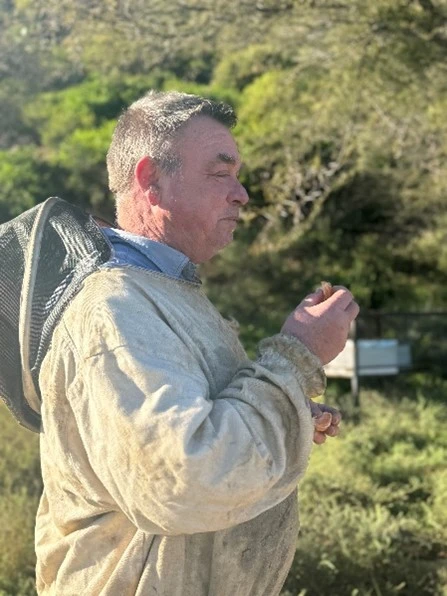
Danie Zeeman
He is the owner of this company. He never intended for his beekeeping hobby to become a something. It started as something to do on weekends to relax his mind. Apparently, he was very anxious, because before he knew it, he had over a hundred hives with no idea what to do next.
With the help of his wife who showed him how to use the internet, he typed ‘beekeeping’ in the search bar. The rest is history.
He bought some second-hand beekeeping equipment from retired beekeepers who also shared their knowledge with him and little by little his hobby expanded.
Today, beekeeping is one of his main topics of discussion, he has a lot more beekeeping equipment and he has over 600 hives (in counting) that he builds himself. He can build a small hive box in under 10 minutes and if you give him 5 more it will have a fresh coat of paint on with primer. A very proud man.
He still continues to be curious about his hobby and claims to learn something new every day!
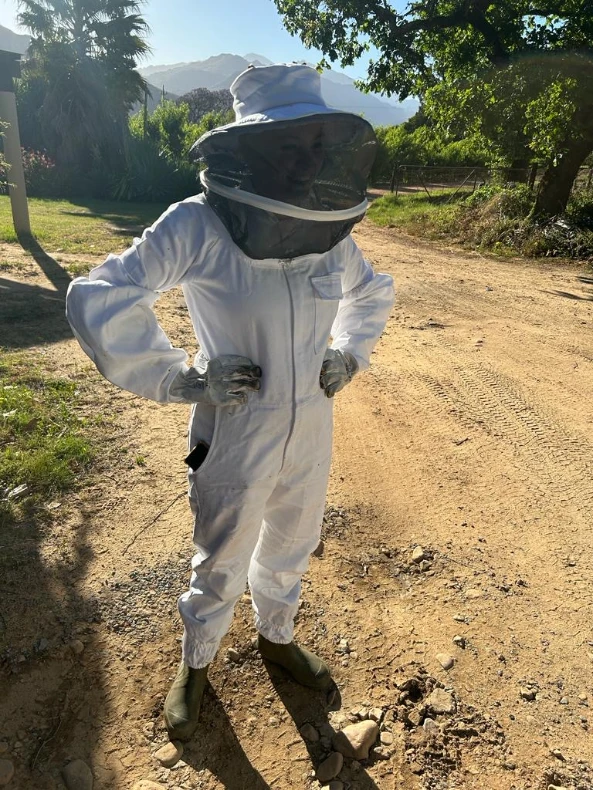
Lorraine Zeeman
When Danie discovered that he had too much honey that needed to be sold before he can harvest more, he asked his daughter, Lorraine to come up with a plan and manage the honey sales. Lorraine always loved the whole process and started to look into all-natural skincare inspired by bees. After months or research and perfecting her craft, she created a few products to sell.
Then Mountain Bee was created. The product list started to grow until it was big enough so that we could launch a website. This was her goal from the start.
When you are communicating with Mountain bee, you are communicating with Lorraine. Lorraine’s main job is to create, market and sell products.
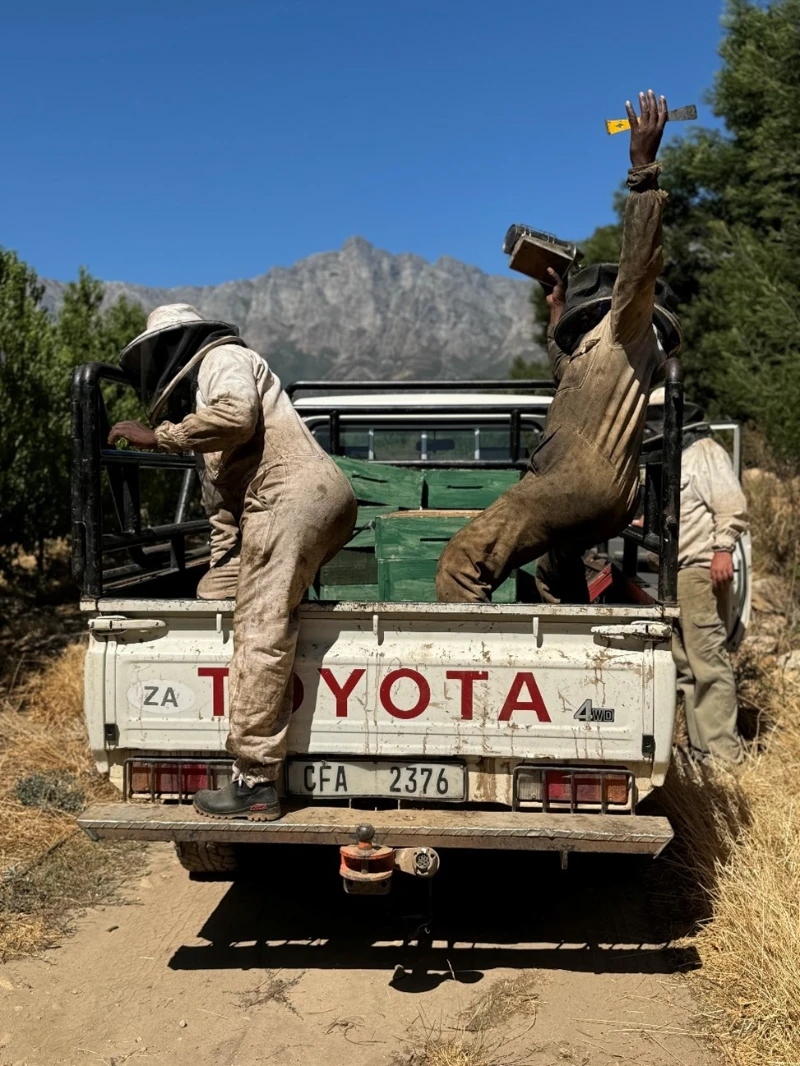
Bothwell & Idos
These two bee whisperers are the strength and the energy of our business. They jump on roofs, balance on branches and climb high trees to get to certain hives. It is always a joy to work with them because they are always happy and energetic!
Their job is to help build and maintain hives, extract honey and supervise the bees. We just love working and learning with them.
Our Best Sellers
-
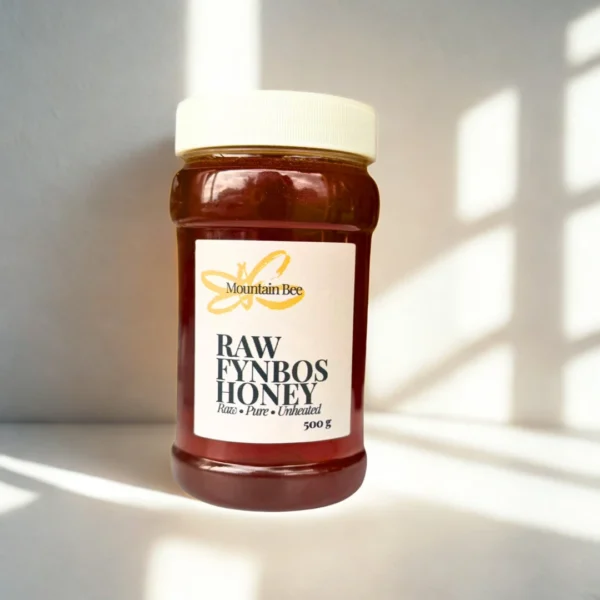
Fynbos Honey 500g
R72,00 -
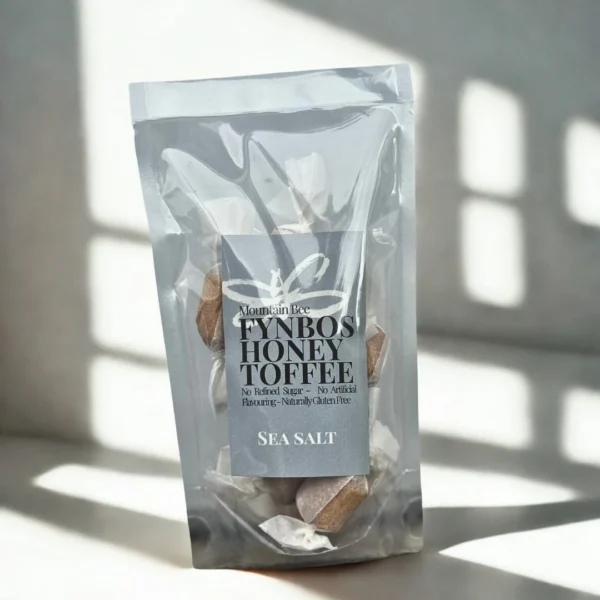
Fynbos Honey Toffee with Sea Salt
R35,00 -
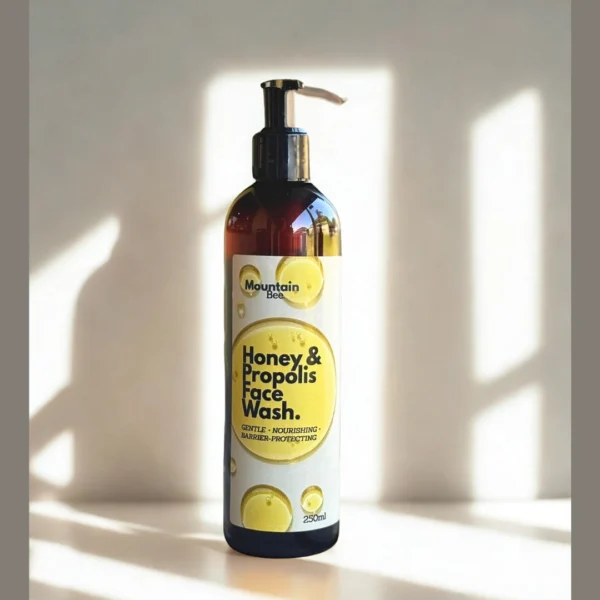 Rated 5.00 out of 5
Honey & Propolis Face Wash 250ml
R110,00 -
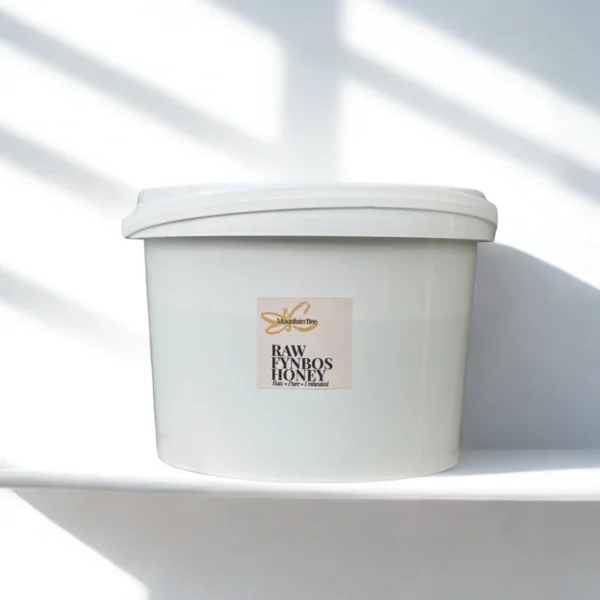
Fynbos Honey 5kg
R620,00 -
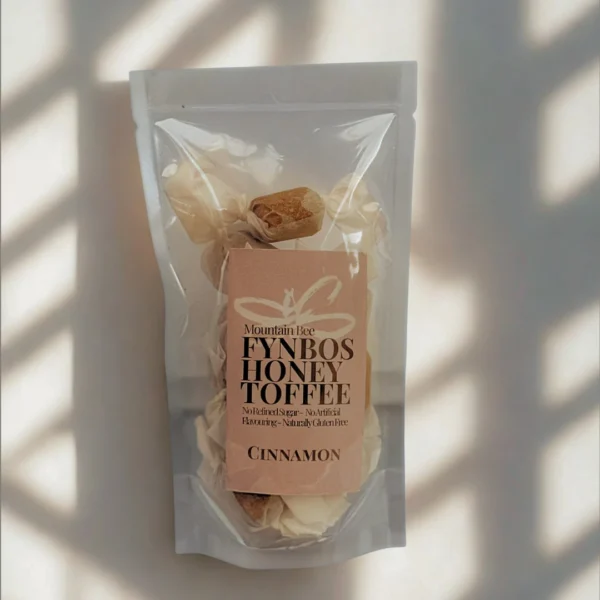
Honey Toffee with Cinnamon
R35,00
Frequently Asked Questions
Where are you located?
All of our hives are located in the Breede Valley mountains, from the Robertson mountains to the Tulbagh Waterfall area. Here the bees collect pollen from the purest fynbos and eucalyptus with minimal human and pesticide contact.
Why is my honey lighter/darker in colour than before?
The colour of the honey depends on the time of the season in which it was harvested. The first honey of the season has a lighter colour than the honey harvested later in the season. Different types of fynbos blooms at different times of the year, which means that the bees feed on a large variety of pollen from the fynbos. This is what makes fynbos honey so unique!
Can I avoid courier costs by collecting my own order?
Yes, you can! We only accept pick ups during business days and hours, but you are more than welcome to send us a WhatsApp on 072 598 3376 with your order and we can arrange a pick up.
Do you practise sustainable beekeeping?
Yes, we do! We do not use our bees for pollination of commercial farms. This means we do not stress our bees out by moving the hives once we have placed it in our selected areas. The only time we will move a hive is when it is completely empty. We do not collect pollen and royal jelly from our hives and we also do not feed or medicate our bees at all.
How do I become a reseller?
You can send us a WhatsApp on 0725983376 and we can supply you with all of the necessary information.
Will your honey crystalize?
We are very proud to say yes, our honey will crystalize because it is raw and pure honey. We do not and will never do anything to our honey to prevent it from doing so. It will damage all of the good qualities of our honey and we will not let all of the hard work from the bees go to waste.
Why should I buy honey from a local beekeeper rather than a supermarket?
A local beekeeper that you can trust is your friend. They will provide you with the best pure and raw honey. The reselling market for honey in supermarkets is very competitive and they demand large quantities of uncrystallized and convenient honey for the lowest possible price. The quality factor gets thrown out of the window. The chances of the honey in those stores being pure and raw is very low.
If you buy from a local beekeeper or local shop you will most likely be able to get it for the lowest price because you will be avoiding the rest of the supply chain costs.
Can I use these skincare products if I have sensitive skin?
Our products are all-natural, with no synthetic fragrance, colourants or parabens. We use essential oils for scent, so please check the ingredient list first if you know you react to a particular essential oil. We use natural preservatives: Vitamin E, tea tree essential oil and Preservative Eco.
I have a nut/seed allergy, can I still use your skincare products?
We will not recommend that you use our products if you have a nut allergy, because almost all of our products are made using sweet almond oil, coconut oil, jojoba oil and shea butter.
What is fynbos honey?
It is honey collected from a large variety of fynbos spring flowers, not just one flower. It is collected from fynbos native to the Western Cape. You will not get this type of honey anywhere else in the world.
What should you look for in a raw honey?
Raw honey that has not been irradiated or heated above 40°C. Look for honey that still shows pollen and crystallises over time — both are signs it has not been processed.
What makes honey raw?
It is honey that has not been heated for pasteurization. The honey has been kept under 40°C and has never been heated above.
What is the difference between raw and irradiated honey?
Raw honey still contains all of its antioxidants, nutrients, bioactive plant compounds, vitamins and minerals. When you look at raw honey you might still see the pollen and air bubbles.
Honey that has been heat treated above 40°C loses a lot of its nutritional value.
What makes pure honey?
Honey that has not been cut with corn syrup, sugar or another ingredient to dilute it or change the flavour.
How do I know my honey is pure?
Buy from a beekeeper who will tell you where and when the honey was harvested. Raw, pure honey is thicker than processed honey, crystallises over time, and often still shows pollen. Ours is harvested from our own hives in the Breede Valley and never heated above 40°C.
How do I know if my honey has been heat treated?
Raw honey is thicker and creamier compared to processed honey which is smoother and runnier. It also naturally crystallizes over time, while processed honey remains a clear liquid form.
Does beeswax clog your pores?
Beeswax is non-comedogenic. This means that it will not clog your pores.
Is beeswax good for oily skin?
Beeswax is non-comedogenic and non-irritant, this makes the ingredient good for all skin types.
Is beeswax suitable for blemish-prone skin?
Beeswax forms a protective barrier on the skin’s surface, protecting your skin from environmental irritants and harsh weather. Beeswax is particularly exceptional being non-comedogenic (non-pore blocking), allowing the skin to breathe freely. That makes it particularly suited to blemish-prone and sensitive skin.
How does beeswax support the skin barrier?
Beeswax forms a protective layer that helps the skin hold moisture and shields it from wind, weather and environmental irritants. It has been used in balms and ointments for centuries, going back to ancient Egypt.
What does beeswax do for the look of the skin?
Beeswax helps keep the skin soft and hydrated, and it is naturally rich in vitamin A. By holding moisture at the surface it helps skin look smoother and more supple.
What is propolis?
It is a resin that bees make by collecting tree buds and sap and mixing it with their saliva and beeswax. They use it to seal open spaces in the hive, to keep the hive clean, and to line the cell walls where new bees develop.
Propolis contains over 300 naturally occurring compounds, including flavonoids, plant resins and antioxidants.
What does propolis do for the skin?
Propolis is naturally rich in antioxidants and plant compounds, which is why it has long been valued for soothing and comforting the skin. It helps the skin hold moisture and supports its natural barrier. We use it across our face and body range.
Is propolis used for uneven skin tone?
Propolis is naturally rich in antioxidants, and it is often used in skincare aimed at supporting a more even-looking complexion. It also helps the skin hold moisture, which makes the surface look brighter and more comfortable.
How do I use propolis?
Mix a few drops of our propolis tincture into a teaspoon of honey and swallow. Follow the directions on the label of the product you have.
Who should avoid propolis?
Anyone allergic to bee products should avoid propolis. If you are unsure, patch test on a small area first, or speak to your doctor or pharmacist before using it.
What happens if I take too much propolis?
Propolis is considered to be nontoxic and there are no reports of human overdose. Propolis can trigger an allergic reaction in people hypersensitive to bee products.
Do you always have honey in stock?
Not always. Our honey is harvested seasonally, in summer, and we only take the top section of the hive, so supply depends on the season and on what the bees have made. Some sizes sell out between harvests.
Send us a WhatsApp on 072 598 3376 and we will tell you what is available or when the next harvest is due.
What is the difference between honey and propolis?
They are two different things the bees make. Honey comes from flower nectar and is a food. Propolis is a resin the bees make from tree buds and sap, and they use it to seal and protect the hive. Propolis contains over 300 naturally occurring compounds, including flavonoids and antioxidants, which is why we build it into our skincare.
Find us
- +27 72 598 3376
- info@mountainbee.africa
- FD Zeeman Witelsboom, Breerivier, 6858